
The Tree of Life: From the Garden to the City
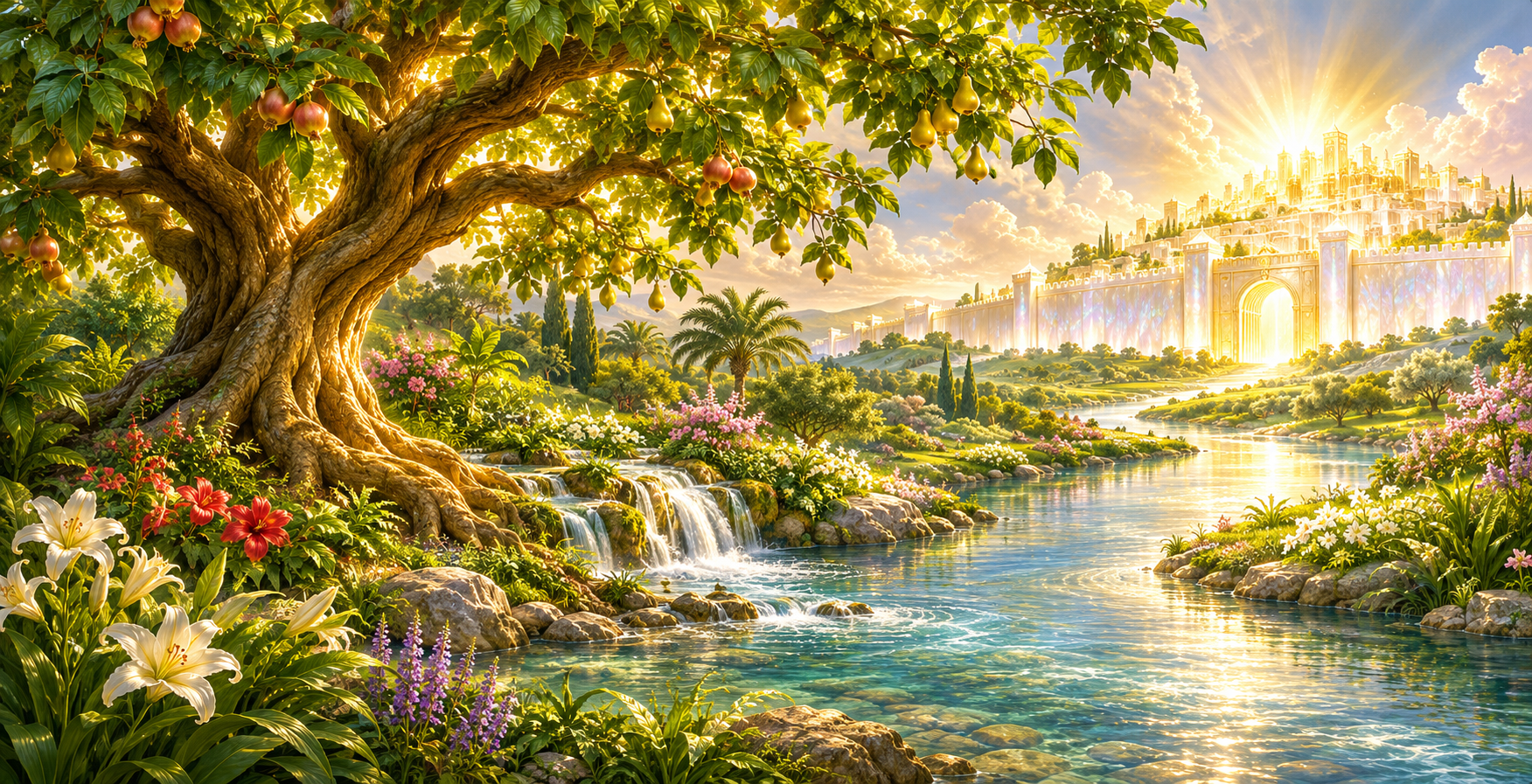
The Tree of Life appears near the beginning of Scripture in the Garden of Eden and returns in its closing vision beside the river flowing from the throne of God and of the Lamb. This thread carries a message of life, redemption, and restored fellowship. What sin interrupted, Yehovah brings to fulfillment through Yeshua.
Life in the Garden
Genesis 2:8–9 describes Yehovah planting a garden in Eden and placing the man there. Among the trees that were beautiful and good for food stood the Tree of Life in the midst of the garden.
Life begins with the generosity of our Creator. Adam receives a home, provision, purpose, and fellowship with the One who formed him. The Tree of Life reminds us that life ultimately comes from Yehovah. We were created to live in dependence upon Him.
Two Trees and a Choice
Genesis 2 also introduces the tree of the knowledge of good and evil. Yehovah commands Adam not to eat from that tree. The two trees are distinct, and understanding that distinction helps us follow the story.
In Genesis 3, the serpent draws the woman toward distrust and disobedience. Adam and Eve eat the forbidden fruit. Shame, fear, hiding, and broken fellowship follow. Sin reaches into the relationship humanity was created to enjoy with the Father.
The question reaches our hearts today: Will we trust Yehovah’s Word and receive life on His terms, or will we seek to determine good and evil apart from Him?
The Way Is Guarded
Genesis 3:22–24 describes humanity being sent out of the garden. Cherubim and a flaming sword guard the way to the Tree of Life, preventing fallen humanity from eating and living forever in that condition.
The guarded entrance reveals the seriousness of sin and the depth of our need for redemption. We cannot restore ourselves to the life and fellowship we have lost. We need the mercy and saving work of Yehovah.
Yet even within the account of the fall, hope appears. Genesis 3:15 announces the coming defeat of the serpent through the offspring of the woman. We understand this promise as pointing forward to Yeshua. The story continues toward redemption.
Wisdom That Leads Toward Life
The image of the Tree of Life also appears in Proverbs. Wisdom is described as a tree of life to those who take hold of her. Proverbs 3:13–18. Proverbs 11:30 connects the fruit of the righteous with a tree of life, and Proverbs 15:4 uses the image for a wholesome, healing tongue.
These passages bring the picture into our daily walk. Wisdom, righteousness, and words that heal reflect the goodness of the One who gives life. Our speech and conduct can become instruments of encouragement and restoration.
As we prepare the Bride, we ask Yehovah to shape what grows from our lives. Are our words nourishing others? Are our decisions rooted in His wisdom?
Yeshua Opens the Way to Eternal Life
Yeshua declares that He is the way, the truth, and the life, and that we come to the Father through Him. John 14:6. First John 5:11–12 teaches that eternal life is in the Son.
First Peter 2:24 describes Yeshua bearing our sins in His body upon the tree, so that we might die to sin and live for righteousness. This is the language of His crucifixion. The cross is not identified as the botanical Tree of Life in Eden; through His sacrifice and resurrection, however, Yeshua brings us the eternal life that sin could never provide.
Our restoration rests upon His redeeming work. We receive forgiveness, reconciliation, and life through faith in Him. The One who laid down His life is the risen Messiah who brings us near to the Father.
The Promise to Those Who Overcome
In Revelation 2:7, Yeshua promises those who overcome that they will eat from the Tree of Life in the paradise of God.
The tree that stood behind a guarded entrance in Genesis now appears in the promise spoken by our risen Lord. He calls His people to hear what the Spirit says, return to their first love, and remain faithful. Revelation 2:1–7.
This promise strengthens us to endure. Our hope reaches beyond present trials into everlasting fellowship with Him.
The River and the Tree in Revelation
Revelation 22:1–2 describes the river of the water of life, clear as crystal, flowing from the throne of God and of the Lamb. The Tree of Life stands on either side of the river, bearing twelve kinds of fruit and yielding fruit every month. Its leaves are for the healing of the nations.
Ezekiel 47:1–12 offers an earlier prophetic picture of life-giving water flowing from the sanctuary, with fruitful trees whose leaves bring healing. Revelation brings these themes into its vision of the dwelling of God with His people.
The source is His throne. Life, fruitfulness, and healing flow from His presence. The nations that have known conflict and suffering are included in this glorious picture of restoration.
No More Curse
Immediately after describing the Tree of Life, Revelation declares that there will be no more curse. God’s servants will worship Him, see His face, and bear His name. There will be no night, because the Lord God gives them light. Revelation 22:3–5.
Genesis records the entrance of sin, the curse, and humanity’s departure from the garden. Revelation reveals the curse removed and His servants dwelling in His presence.
In Genesis, the way to the Tree of Life is guarded. In Revelation, Yeshua promises His faithful people a share in its life.
The Bible moves from the garden toward the holy city, where Yehovah and the Lamb are its temple and His glory provides its light. Revelation 21:22–23.
Living in the Hope of Restoration
This teaching invites us to receive the life Yeshua gives and allow that life to bear fruit within us. We draw near through faith, turn from sin, walk in His Word, and depend upon the Holy Spirit.
For those carrying wounds, grief, or weariness, the closing vision of Scripture offers hope. Evil and death do not have the final word. Yehovah’s purpose reaches toward a creation freed from the curse and a people who see His face.
The Tree of Life begins in Genesis and appears again in Revelation. Between those passages unfolds the story of our Redeemer. Through Yeshua, we are called into everlasting life and fellowship with our Father.
Continue Studying
From Genesis to Revelation: From the First Light to the Glory of the Lamb